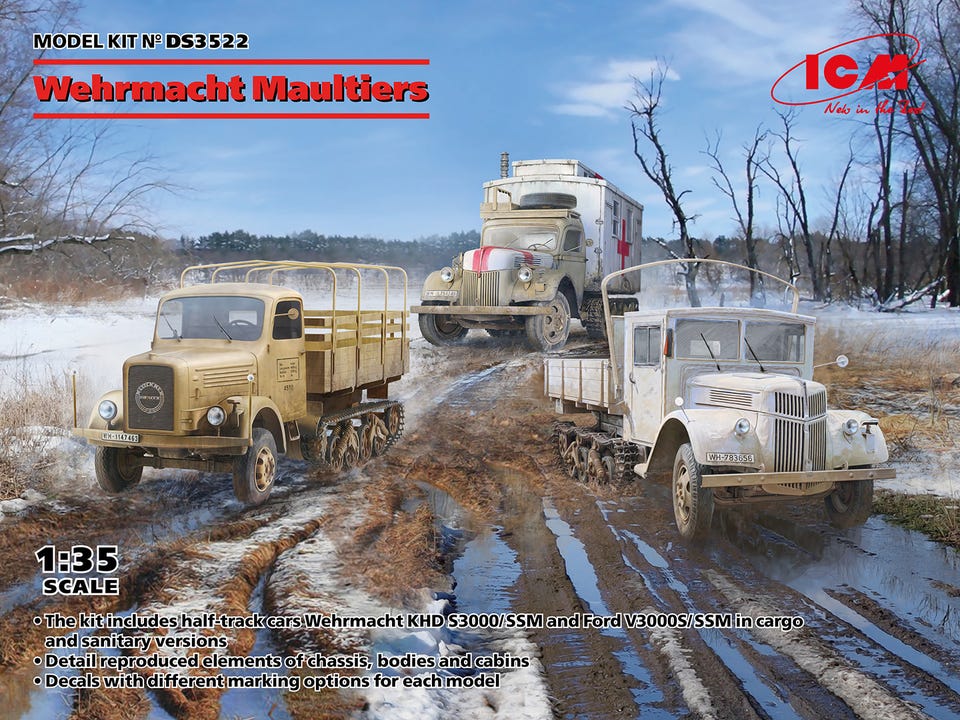
Wehrmacht MaultiersThe
Wehrmacht command in its plans for conducting a lightning war well
understood the role of vehicles. Reliable provision of mobility of
combat units, delivery of military cargo, ammunition, transportation of
personnel, weapons and other tasks were assigned to trucks. However,
with the onset of autumn 1941, in the off-road conditions of the Eastern
Front, thousands of Wehrmacht cars began to get stuck in wet soil and
snow. It was decided to put on part of the trucks instead of the rear
axle tracked trolley. This was done as part of the ‘Maultier’ (Mule)
program – the creation of a half-track cross-country freight transport
for the needs of the Wehrmacht. In 1942, German industry began to
produce half-track cars based on three-ton trucks, among which were the
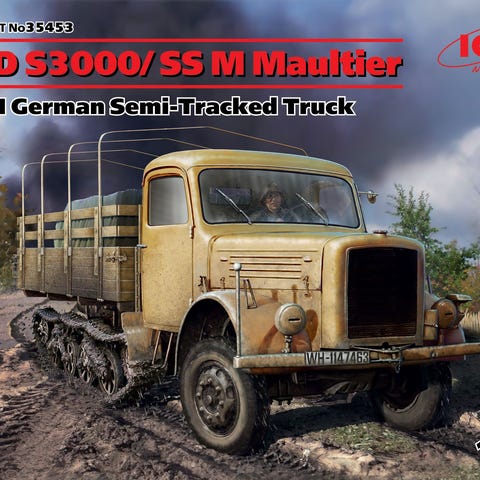
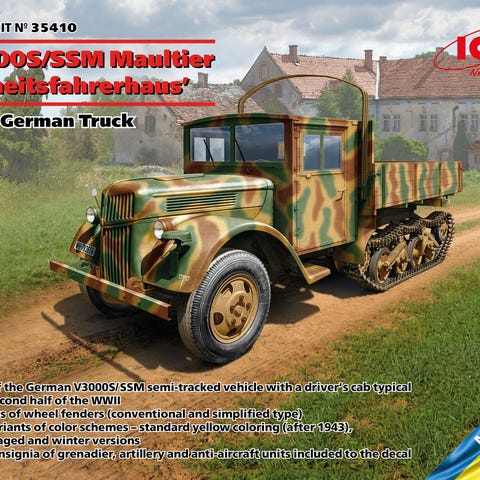
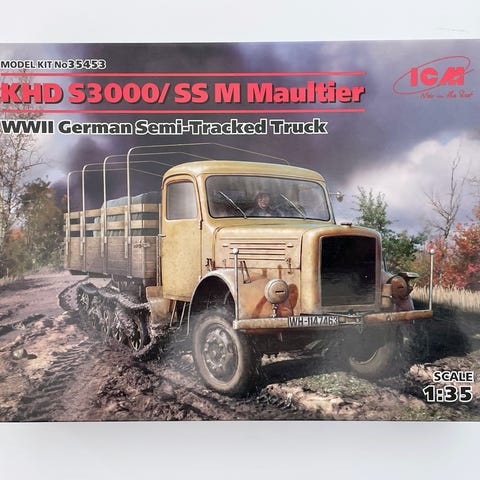
KHD S3000/SS M of Klöckner-Humboldt-Deutz (on the KHD S3000 chassis) and
Ford V3000S/SS M (on the Ford V30 chassis).The KHD-produced
Maultier received the military index Sd.Kfz.3c, and the Ford version
received Sd.Kfz.3b., and Ford – Sd.Kfz.3b. Machines were universal and
had excellent cross-country ability, they transported personnel and
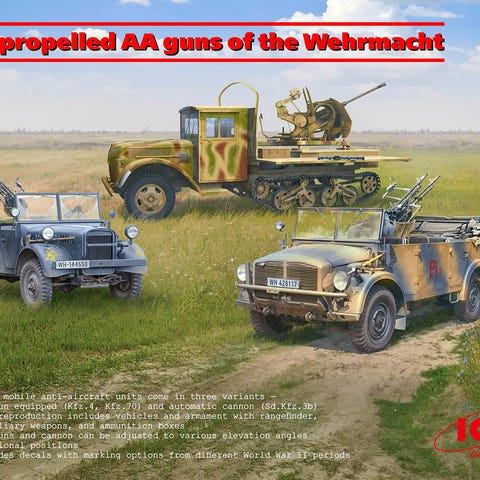
cargo off-road, towed guns, with automatic guns installed in the body
were used as anti-aircraft self-propelled guns, and variants with a
closed body could be used as army ambulances. Starting in 1943,
simplified cabs (“Einheitsfahrerhaus”) began to be installed on
Wehrmacht trucks, this was done in order to simplify production. In turn, some Maultiers were equipped with such cabins.
Huom! Painike, joka näyttää koko kuvauksen on pelkästään visuaalinen.