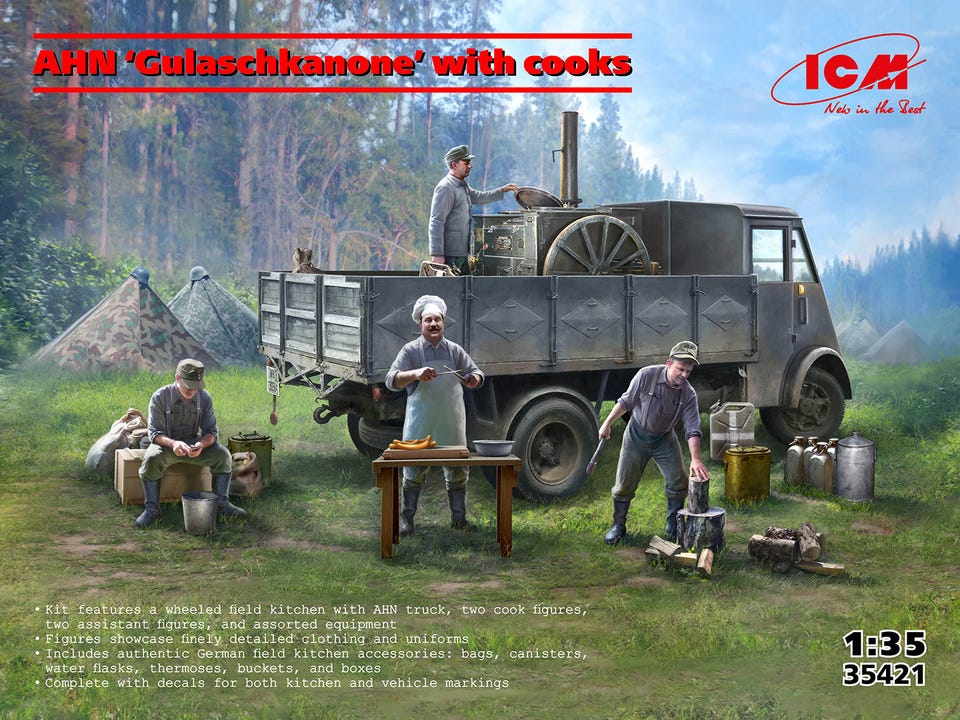
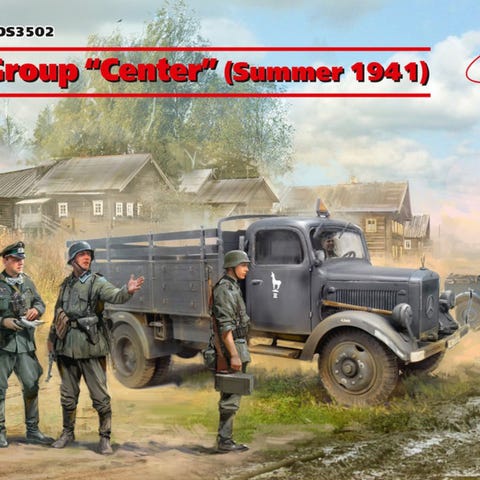
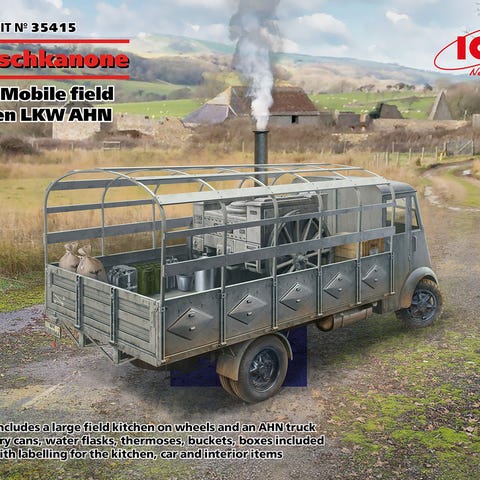
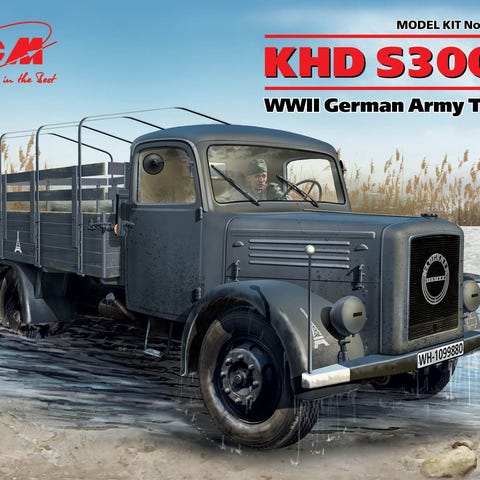
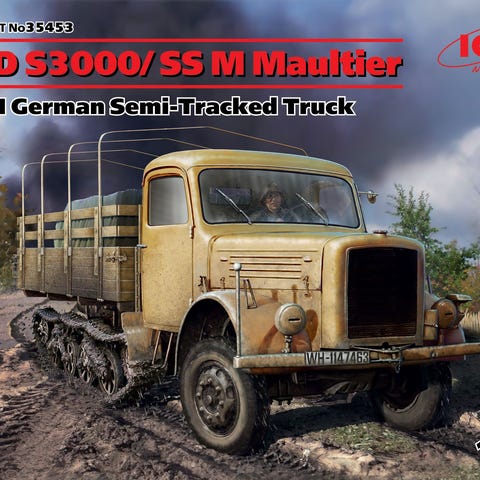
AHN “Gulaschkanone” with cooksAmong
the many factors that determine the course of battles, one is not
immediately obvious but is crucial—food supply in combat conditions. A
quality hot meal for a soldier is of great importance and sometimes
influences the combat effectiveness of units more than modern weapons or
equipment. Taking this into account, the Wehrmacht paid significant
attention to soldier nutrition during wartime. In combat conditions or
during marches, field kitchens on wheels of various types were used:
large kitchens for 125 to 225 personnel, and smaller kitchens for 60 to
125 soldiers. These kitchens were either transported on trailers pulled
by vehicles or horse-drawn wagons. They were also frequently set up in
the beds of different trucks. These kitchens, humorously referred to by
soldiers as the ‘Gulaschkanone,’ allowed for the preparation of various
dishes. A large kettle, which had an insulating layer (usually made of
glycerin), was used for the main dishes, and later versions of the
kitchens included a separate kettle for frying. Meals were distributed
either directly into soldiers’ mess kits or into large thermoses for
delivery to units located some distance away from the kitchen. The main
part of the daily ration was usually served at lunch, which could
include, for example, a meat soup, a serving of potatoes with a generous
portion of meat, and vegetables. It was also common practice to
requisition food from the local population to improve the soldiers’
rations beyond the established norms.Model size (length x height)190 x 94 mmBox size294 x 230 x 58 mmNumber of details266+61Figures AvailabilityYesFigures count4
Huom! Painike, joka näyttää koko kuvauksen on pelkästään visuaalinen.