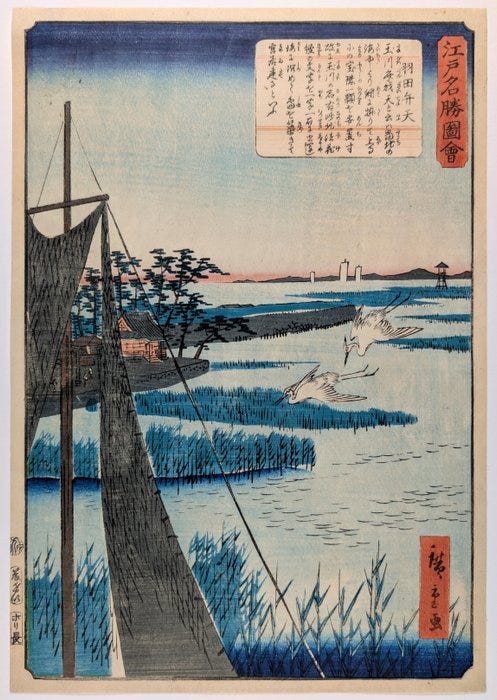
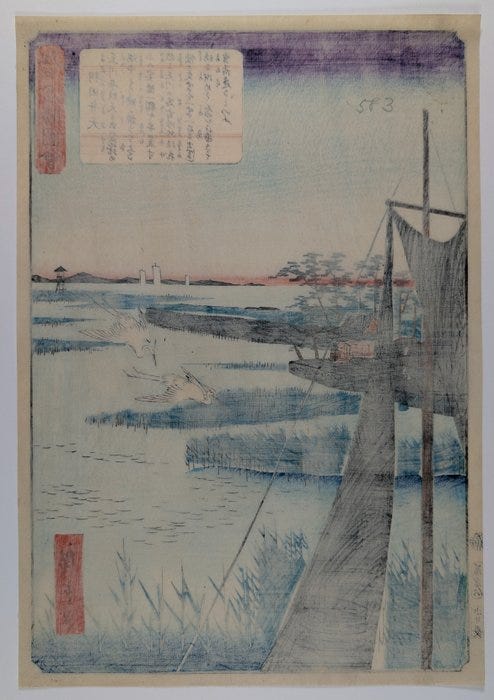
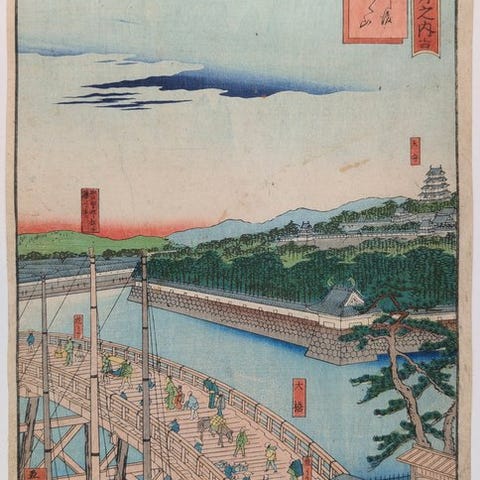
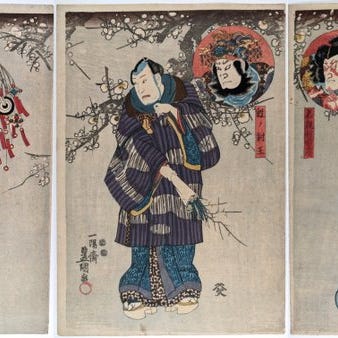
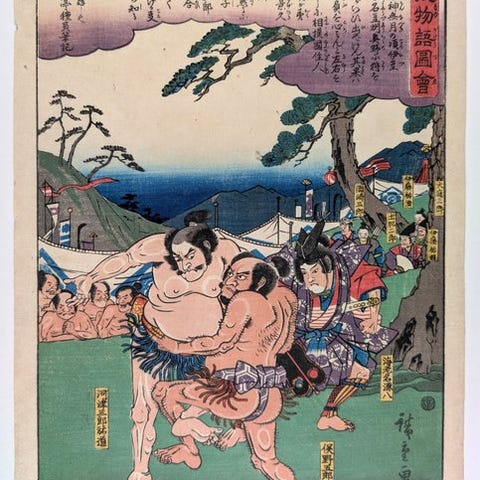
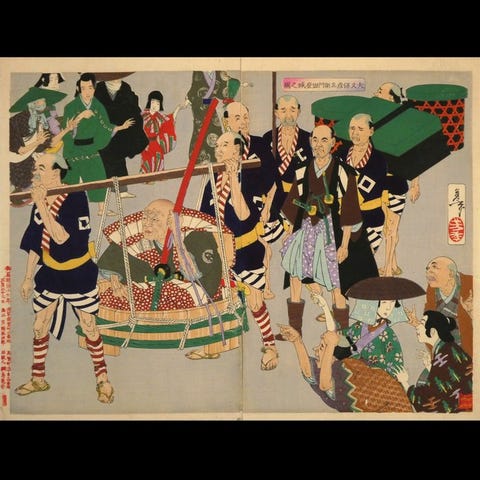
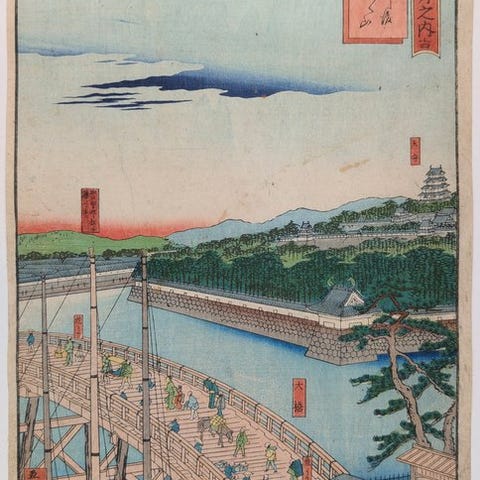
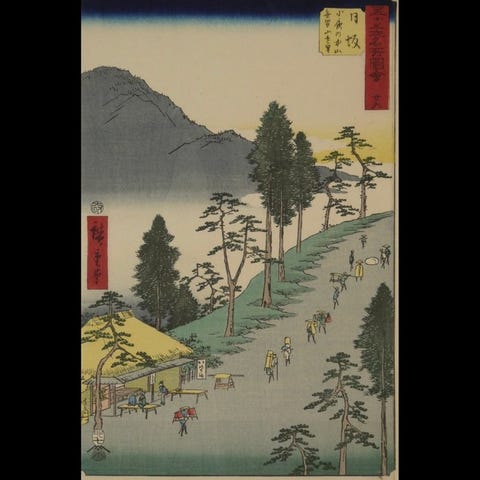
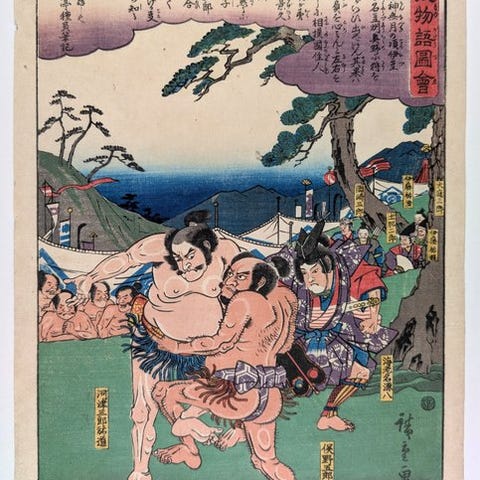
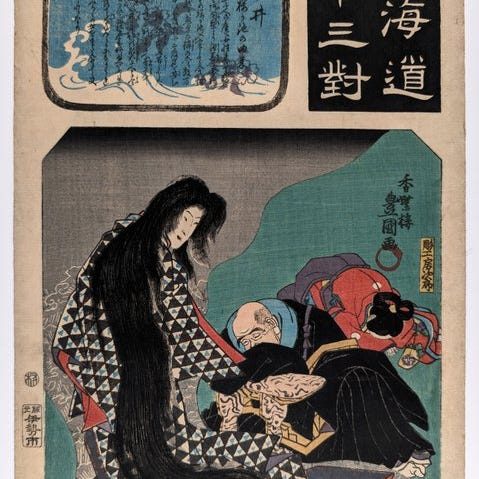
Hiroshige II · Haneda Benten · From “Famous Views of Edo” (Edo meisho zue) · noi
Myydään250 €
Siirry myyjän sivustolle
Utagawa Hiroshige II:n monivärinen puupiirros Haneda Benten sarjasta Famous Views of Edo on tehty noin vuonna 1862 Ōban tate-e -muodossa Edo-kaudella.
Kiinnostuitko kohteesta? Siirry Catawikiin ostamaan tai tekemään tarjous painamalla punaista ”Siirry myyjän sivustolle” -painiketta. Näet kokonaishinnan ennen tarjouksen vahvistamista.
- Tärkeää:
Voittavaan tarjoukseen lisätään 9 % ostajansuoja + €3 sekä toimituskulut.
** Harvoin nähty design markkinoilla **
二代 歌川広重 — UTAGAWA HIROSHIGE II (1826–1869)
Title: Haneda Benten (羽田弁天)
Series: Famous Views of Edo (江戸名勝圖會, Edo meisho zue)
Date: c. 1862 (Bunkyū 2)
Publisher: Tsutaya Kichizō (蔦屋吉蔵, Kōeidō)
Carver: Hori Chō (ほり長)
Technique: Woodblock print (mokuhanga), polychrome (nishiki-e)
Format: Ōban tate-e, [36 × 24 cm]
__________________________________________________________
CONDITION
The impression is strong and reads well. The green colors shifted blue due to sun exposure. The other colors are well saturated. The paper is clean, firm and supple. A good impression overall!
__________________________________________________________
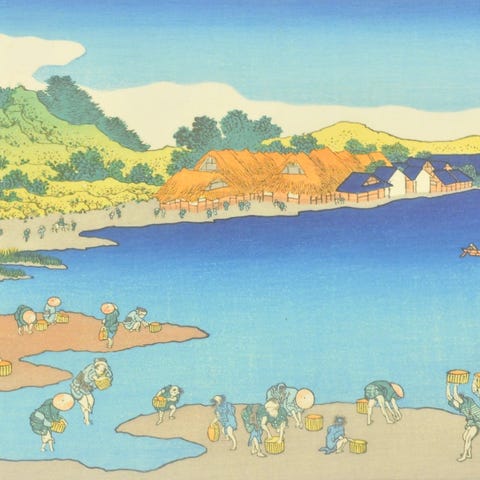
Haneda lies at the mouth of the Tama River, where it flows into Edo Bay. In the Edo period, the Benzaiten shrine at Haneda was a well-known stop for pilgrims and day trippers from the city. Hiroshige I had already included it in his One Hundred Famous Views of Edo in 1858. The text on this sheet explains how the shrine got its other name, Tamagawa Benzaiten. It enshrined a small sacred jewel (hōju) that was said to have come up from the sea in a fishing net, and the “jewel” (tama) gave the shrine its name. The text also records that the Lotus Sutra was copied here one character on each stone, and that the stones were buried under a mound on which the shrine was built.
The Artist
Hiroshige II, born Suzuki Chinpei and first working as Shigenobu, was a pupil of Utagawa Hiroshige I. After his master died in 1858, he married Hiroshige’s adopted daughter and took over the Hiroshige name. He continued the landscape and famous-view series that the Hiroshige name was known for. In 1865 he left the household, moved to Yokohama and worked from then on as Kisai Risshō. The Edo meisho zue belongs to his best years as Hiroshige II, shortly before the end of the Edo period.
Tietoa Catawikista
Catawiki on vuonna 2008 perustettu alankomaalainen verkkohuutokauppa-alusta. Olemme tunnettuja siitä, että olemme erikoistuneet harvinaisten ja poikkeuksellisten esineiden huutokauppoihin. Catawikilla asiantuntijatiimimme arvioi ja tarkistaa kohteet ennen niiden julkaisemista huutokauppaan varmistaakseen niiden aitouden ja laadun.
Näytä koko kuvausHuom! Painike, joka näyttää koko kuvauksen on pelkästään visuaalinen.